SIAS. Frugal Innovation Platform SIAS. Frugal Innovation Platform +380671234567 hello@ultr.org
Velyka Vasylkivska Street, 72 Ukraine, Kyiv,
Velyka Vasylkivska Street, 72 Ukraine, Kyiv

Whats SIAS Innovations?
Simple. Ingenious.
Affordable. Sustainable.

SIAS Innovations is a platform that connects researchers, businesses and grassroots innovators who create simple, ingenious and affordable solutions with global potential. We focus on frugal innovations – ideas that deliver more value with fewer resources while remaining sustainable for people, markets and the planet.

In line with global best practices, we consider products, processes, and business models as forms of innovation.

Right now, SIAS is conducting a national study to map how Ukrainian organisations apply frugal principles in practice – across products, processes and business models. The study will help build the first evidence base of SIAS innovations in Ukraine and showcase them internationally.

About the SIAS Innovations Platform
What is Sias Innovations?

Frugal innovations are solutions designed to create high value for many people while using limited resources.
We describe them through four criteria:

s

Simple

Easy to use, robust and focused on core functions.

i

INGENIOUS

Clever in design, often recombining existing technologies in new ways.

a

AFFORDABLE

Radically lower cost compared to conventional alternatives.

s

SUSTAINABLE

Socially inclusive and environmentally responsible over the long term.

LifeStraw

Water Filtration

Country of Origin: Switzerland

Сountries marketed in: Africa, South Asia, Latin America

Qarnot

Distributed Computing & Heat Recovery

Country of Origin: France

Сountries marketed in: Europe

PRADS

Progressive Residential Affordability Development Solution (Australia)

Country of Origin: Australia

Сountries marketed in: Australia

Solagro

Smart Recycling Systems

Country of Origin: Serbia

Сountries marketed in: 30 satisfied clients in 9 countries

Powered by RISE

Powered by RISE

Country of Origin: Malaysia

Сountries marketed in: Malaysia

Collaboration Partners

The project is carried out by an international team of researchers representing academic institutions:
Information partners

Contact us

  • Country Lead
  • Prof Olena Derevianko

Dr. Jaideep Prabhu

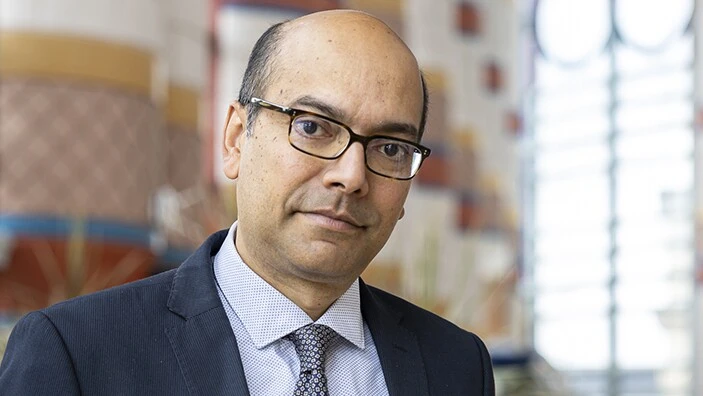
Dr Jaideep Prabhu is a Fellow of the British Academy and Professor of Marketing at Cambridge Judge Business School, University of Cambridge, where he also serves as Vice-Dean for Faculty.

He is an internationally recognized scholar in the fields of innovation, marketing, and strategy.

He is one of the originators and leading theorists of frugal innovation, and a central figure in establishing jugaad as a rigorous and strategically significant innovation paradigm.

His research examines how organizations innovate creatively under resource constraints, build enduring innovation capabilities, and achieve competitive advantage in conditions of uncertainty across diverse economic contexts.

Dr Prabhu is also co-author of the influential books Jugaad Innovation and Frugal Innovation: How to Do More with Less. Alongside his academic work, he has held senior academic and leadership roles across a range of institutions and works extensively at the intersection of innovation research, executive education, and strategic practice.

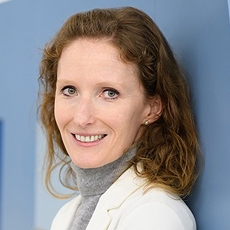
Dr Karin Hoisl

Karin Hoisl is a full professor of Organization and Innovation at the University of Mannheim. She is also a part-time professor of the Economics and Management of Inventive Processes in the Department of Strategy and Innovation at Copenhagen Business School, as well as a research affiliate at the Max Planck Institute for Innovation and Competition in Munich.

She holds a PhD in Management from Ludwig Maximilian University of Munich. She is a former associate editor of the Strategic Management Journal and is currently an associate editor of Management Science, ICC Industrial and Corporate Change, and the Journal of Industrial and Business Economics.

She serves on the Editorial Review Board of the Academy of Management Discoveries and is an Advisory Editor of Research Policy. Her main research interests include IP and innovation, gender gaps in STEM, digital transformation, and innovation in extreme environments.

Her work has been published in Management Science, Organization Science, the Strategic Management Journal and Research Policy

Dr Olena Derevianko

Dr Olena Derevianko is a Professor at Taras Shevchenko National University of Kyiv and a Doctor of Science in Economics (Ukraine) and Political Economy (Switzerland).

Her academicresearch focuses on reputation management, innovation, crisis governance, and businessdevelopment strategy, with particular attention to organizational resilience and decision-makingunder uncertainty.

Нer work addresses corporate reputation theory, stakeholder engagement, reputational antifragility, and innovation in high-risk and crisis environments.

Alongside her academic career, Dr Derevianko is a long-standing Vice President of theUkrainian PR League and the initiator of key professional institutions, including the PRNextInternational Forum and the National Corporate Reputation Management Quality Ranking. Shealso serves as Head of the Crisis Communications Committee at the Association of CorporateSecurity Professionals of Ukraine and advises organizations on crisis management and strategictransformation.

Dr Daryna Dvornichenko

Daryna Dvornichenko  is a Ukrainian scholar, ESRC Regions and Polarities Network + Fellow, University of Birmingham, Research Fellow at the University of Worcester  and a visiting fellow at the  University of Oxford.

She has previously held research fellowships at the British Academy, German Marshall Fund, University of Wrocław, and King’s College London.

Daryna serves on the board of the Humans for Rights Network, is a UN Women Delegate to the CSW, and a research affiliate at the Refugee Law Initiative.

Her work, grounded in European integration, economic empowerment, and human rights, especially for vulnerable communities, focuses on developing strategies for resilient recovery amid crisis and displacement.

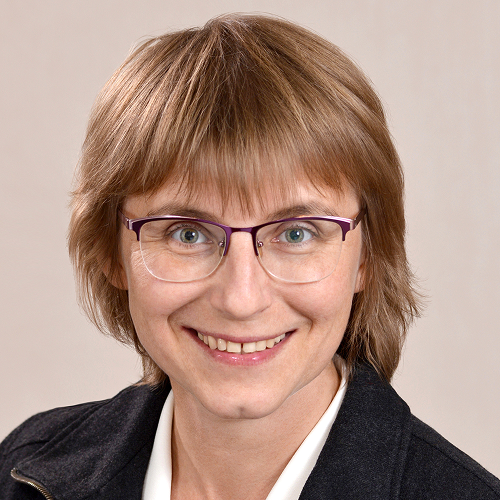
Dr Liudmyla Petrenko

Liudmyla Petrenko is a Senior Research Fellow at the Max Planck Institute for Innovation and Competition in Munich and a professor in the Department of Business Economics andEntrepreneurship at Kyiv National Economic University named after Vadym Hetman (KNEU).

A Doctor of Economics, she is an expert on intellectual property, innovative entrepreneurship, and sustainable development. Her research explores how industrial innovations, digitalplatforms, and healthcare sectors enable economic resilience and growth in wartime Ukraine.

She also analyses the commercialization of medical and technological innovations, and supply-chain resilience.

Drawing on economic modelling, empirical analyses, case studies, fieldexperiments, surveys, patent data, and firm-level statistics, her work informs policy aimed atrebuilding Ukraine’s economy and strengthening EU–Ukraine integration.

LifeStraw

Situation

Hundreds of millions of people worldwide lack access to safe drinking water, leading to widespread waterborne diseases, especially in low-resource and emergency contexts.

Task

Develop a low-cost, portable solution that can immediately provide microbiologically safe drinking water without electricity or infrastructure.

Action

LifeStraw introduced point-of-use water filtration devices using hollow-fiber membrane technology, combined with large-scale humanitarian distribution through NGOs, schools, and disaster response programs.

Result

By 2025, LifeStraw continues active operations in over 60 countries, reporting millions of people reached annually, continuous product innovation, and verified reductions in waterborne disease risk. The model is widely cited as a benchmark frugal innovation in global health.

The portable LifeStraw filter received widespread recognition: Time magazine named it one of the best inventions of 2005, highlighting the device’s ability to filter out microorganisms that cause serious diseases.

Qarnot

Situation

Data centers generate massive amounts of waste heat, while households—especially social housing—face high energy costs and carbon-intensive heating systems. .

Task

Transform waste heat from computing into a usable resource while maintaining commercially viable high-performance computing services.

Action

Qarnot deployed distributed computing units embedded in heating systems (“digital heaters” and later “digital boilers”), delivering cloud and HPC services while simultaneously heating buildings and hot water networks.

Result

By 2025, Qarnot operates at scale across multiple European countries, with commercial contracts, investment rounds, and measurable CO₂ reductions. The model evolved successfully to overcome early limitations and is recognized as a viable circular-energy innovation.

PRADS

Situation

Australia faces a structural shortage of affordable housing for essential workers, while public funding alone is insufficient to meet demand.

Task

Create a market-compatible mechanism that incentivizes private developers to deliver long-term affordable rental housing without direct government subsidies.

Action

PRADS introduced a public–private partnership model granting planning incentives (e.g., increased density) in exchange for binding long-term affordable housing commitments, supported by a digital compliance registry.

Result

By 2025, PRADS is actively piloted, endorsed by major industry bodies, and integrated into national housing policy discussions. It demonstrates measurable increases in affordable units per project and is considered a successful process and governance innovation.

Solagro

Situation

Low recycling rates persist in many countries due to weak incentives, lack of trust in recycling systems, and inefficient waste handling.

Task

Increase recycling participation through a low-cost, engaging, and scalable system that reduces waste volume and motivates users.

Action

Solagro developed smart recycling and crushing units combined with a digital rewards platform, enabling users to recycle cans and bottles while earning tangible incentives.

Result

By 2025, Solagro operates across multiple countries, partners with global brands and municipalities, and has processed large volumes of recyclable waste. The system has received international sustainability awards and demonstrates sustained user engagement.

Powered by RISE

Situation

Electric vehicle adoption in Malaysia has been constrained by the high cost and limited availability of imported EV charging infrastructure.

Task

Develop a locally manufactured, affordable, and scalable EV charging solution to accelerate national EV infrastructure rollout.

Action

Powered by RISE designed and built EV charging stations using predominantly local components, integrating software, payment systems, and smart monitoring to reduce costs and deployment barriers.

Result

By 2025, Powered by RISE operates live charging sites, secures public and private sector partnerships, and contributes to national EV targets. The company is recognized as Malaysia’s first end-to-end local EV charging solution provider.